Frank Kendall on the trouble with banning autonomous weapons [Book excerpt]
Former Air Force Secretary Frank Kendall discusses whether effective arms control can be applied to autonomous systems in this book excerpt.
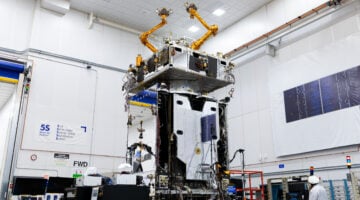
The Robotic Servicing of Geosynchronous Satellites mission, a partnership between DARPA and Northrop Grumman, will result in the first US on-orbit servicing capability, according to company officials.
Space-BACN's optical inter-satellite links and related tech are transitioning to the Defense Innovation Unit for a future on-orbit pathfinder, according to industry execs.
The Air Force in fiscal 2023 attempted to cap the Jolly Green II’s fleet at 75 aircraft, but lawmakers have pushed back.
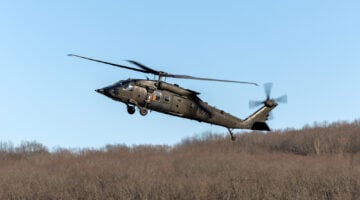
The H-60Mx Black Hawk has been in the works for over a decade and derived from DARPA's ALIAS program.
The first flight test for the X-68A was originally set to begin in December of 2023, Breaking Defense previously reported.
A Navy official said he expects nearly half of all naval surface vessels will be unmanned by 2045.
Only recently emerging from stealth, the MIT-UMD spinout is planning constellations of small, low-cost ISR satellites for multiple military missions.
With rival tech giants building different kinds of “quantum bits,” from superconductors to photonics to trapped ions, DARPA program manager Justin Cohen worries no one approach will work for every purpose — so he wants to find a way to make them work together.
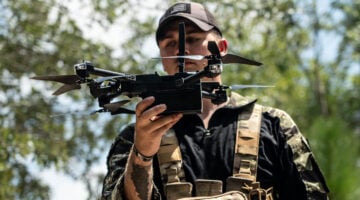
A drone capable of carrying four times its own weight "can actualize the dreams that a lot of people have of using drones in both the military and civilian sectors," DARPA Program Manager Phillip Smith told Breaking Defense.
“Like Frank's Red Hot Sauce, we should be trying to put AI on anything that you can," said David McKeown, a senior cybersecurity official.
America's AI Action Plan features 19 recommendations that involve the DoD, including the creation of a "virtual proving ground."
The program's goal is to isolate or suppress specific signals, which could allow DoD and commercial tech to safely share congested portions of the spectrum.